
Meta Description: Unlock 7-12% yields by converting standard Australian blocks into Rooming Houses. Learn the Class 1b compliance secrets and why co-living is the 2026 cash flow king.
URL Slug: /rooming-house-roi-australia-high-yield-guide
If you’re still holding onto a property that returns a measly 2% or 3% yield, you’re not an investor.
You’re a philanthropist for your bank.
In May 2026, inflation doesn’t care about your "hope" for capital growth.
Interest rates have reshaped the game, and the old "buy and hold" strategy in Sydney or Melbourne is officially a dinosaur.
If you want to beat the machine, you have to change the machine.
Enter the Rooming House.
Specifically, the High-Yield Rooming House, often called Co-living 2.0.
This is how smart money is taking a standard residential block and squeezing out 2x, 3x, or even 4x the rental income of a traditional family home.
The Death of the "Single Tenancy" Dream
For decades, the Australian dream was to buy a 3-bedroom house and rent it to one family.
In 2026, that dream is a cash flow nightmare.
Between land tax hikes, rising maintenance costs, and mortgage stress, a single-income stream property is a liability.
A Rooming House flips the script.
Instead of one lease for $600 a week, you have five or six individual leases at $350 a week each.
Do the math.
That’s the difference between struggling to cover the interest and beating the rates with a portfolio that actually outperforms inflation.

What is a Rooming House (and why is it a Cash Machine)?
In simple terms, a Rooming House (or co-living property) is a residential building where four or more people can lease individual rooms.
Each resident has their own private space, often with an ensuite and kitchenette, while sharing common areas like a main kitchen or laundry.
But don’t mistake this for a 1980s boarding house.
Modern co-living is premium.
It’s designed for young professionals, essential workers, and retirees who want affordable, high-quality housing without the $700/week price tag of a standalone unit.
The Numbers That Matter
- Traditional Rental Yield: 2.5% – 3.5%
- Rooming House Gross Yield: 7% – 12%
- Income Multiplier: 2x to 4x standard rent.
In Brisbane, we are seeing rooms fetch $380 to $450 per week inclusive of utilities.
In Melbourne’s high-demand pockets, $300 per week is the floor.
When you multiply that by 5 or 9 rooms (depending on your council and build type), the ROI isn't just better, it’s transformative.
The "Accidental Investor" Trap
Most people hear "high yield" and rush into a renovation.
This is what we call "Accidental Investing," and it’s a fast track to a $50,000 fine from the council.
You cannot just throw five locks on five doors and call it a Rooming House.
To turn a block into a legitimate cash machine, you need Class 1b Compliance.
Without it:
- Your insurance is void.
- The council can shut you down overnight.
- Your resale value will tank because the "improvement" is illegal.
At AZ Property Solutions, we see this all the time. Investors try to DIY a high-yield strategy and end up with a compliance nightmare.
This is why our "done-for-you" model is the only way to build a scalable, bankable portfolio.

Location Wars: Perth/Brisbane vs. Sydney/Melbourne
In 2026, where you build is just as important as what you build.
Chasing capital growth in Sydney is a 2024 strategy.
If you want cash flow, you look where the demand is high and the entry price is low.
The Perth Explosion
Perth is currently the heavyweight champion of cash flow.
The rental vacancy rate is effectively zero.
When you build a high-spec co-living property in a Perth growth corridor, you aren't just getting 10% yields; you're getting a line of tenants out the door before the paint is dry.
Read more on why Perth vs. Sydney is a no-brainer for 2026 cashflow.
The Brisbane Stability
Brisbane offers a middle ground.
With the Olympics on the horizon and a massive influx of interstate migrants, the demand for "micro-apartments" or rooming accommodation is skyrocketing.
It’s a more mature market than Perth, but the yields remain significantly higher than the southern states.
Why Your SMSF Needs This (Right Now)
If your Self-Managed Super Fund is sitting in a "balanced" retail fund or a low-growth unit, you are losing money every day.
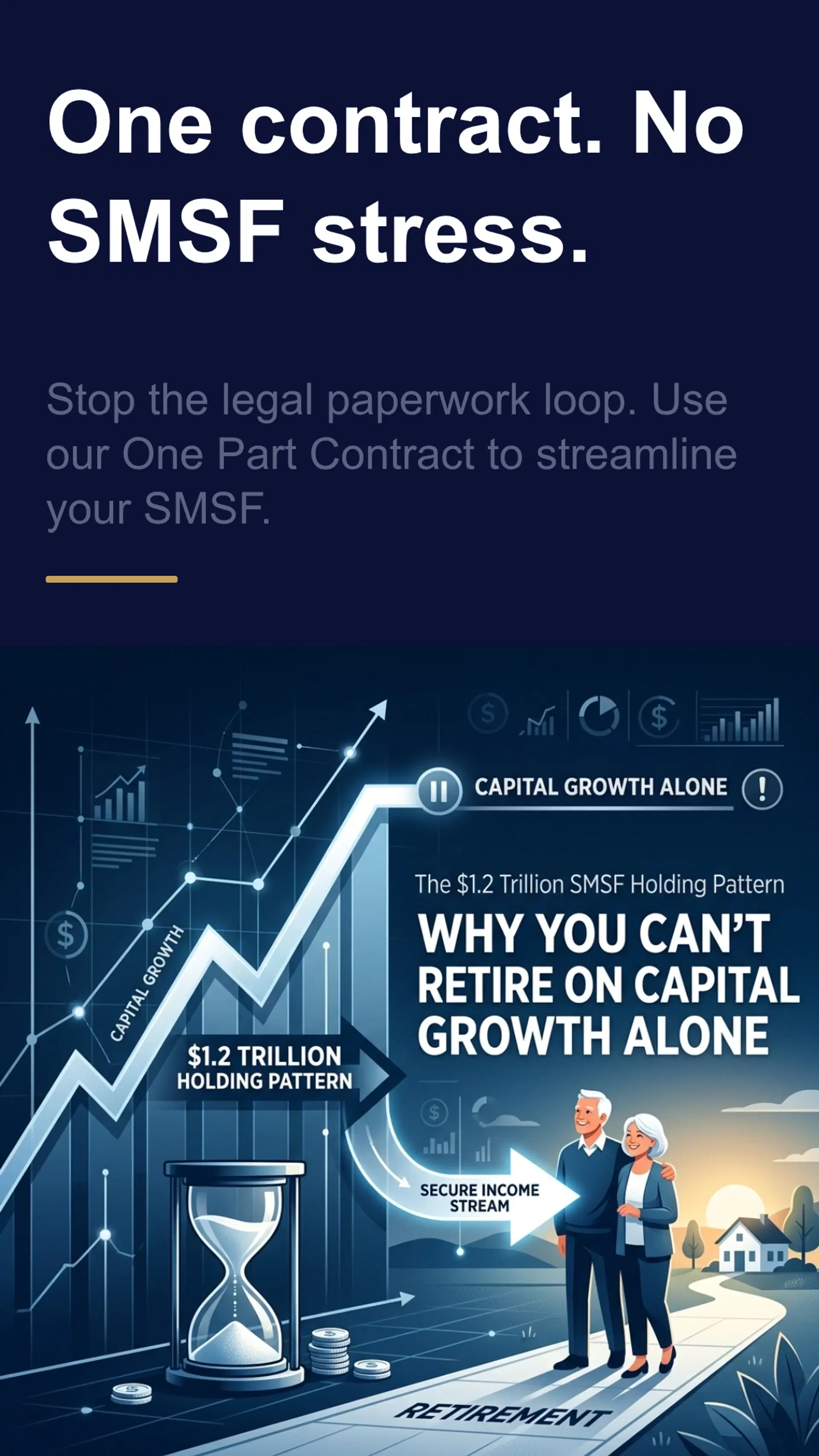
Retirees cannot depend on capital growth alone in a high-inflation environment.
You need income.
A Rooming House is the ultimate SMSF-friendly asset.
Because the yields are so high, the property is often "self-funding" even with a limited deposit.
We specialize in streamlined, single-contract processes that remove the stress for SMSF trustees.
The 3 Pillars of a High-Yield Rooming House
1. Fire Safety and Compliance
You need hard-wired smoke alarms, emergency lighting, and fire-rated doors.
This isn't optional.
The Class 1b classification is the gold standard that protects your investment and your tenants.
2. Professional Management
Don't try to manage five individual tenants yourself.
You'll go grey in a week.
Specialist Rooming House managers handle the individual leases, utility splitting, and common area cleaning.
Yes, they charge a higher percentage than standard agents (usually 10-12%), but they earn it by keeping your occupancy at 98%.
3. Purpose-Built Design
A converted 1970s bungalow will never perform as well as a purpose-built co-living home.
A modern build ensures every room has an ensuite.
Privacy is the number one thing tenants will pay a premium for.
If they have to share a bathroom with four strangers, your yield will suffer.
If they have their own "studio-style" setup, you can double your rental yield overnight.
The Risks: What the Hype-Merchants Won't Tell You
We aren't here to blow smoke.
Every high-yield strategy has risks.
- Operating Expenses: You pay the utilities. If your tenants leave the AC on 24/7, your margins shrink.
- Financing: Not every bank loves Rooming Houses. You need a broker who understands high-yield commercial-residential hybrids.
- Management Intensity: It’s more "active" than a standard rental.
However, the "Done-for-You" model at AZ Property Solutions mitigates these risks.
We handle the site selection, the builder, the compliance, and the property management transition.
You just provide the capital and watch the deposits hit your bank account.
Expert Validation: Why We Take This Stance
"The Australian housing market is bifurcating. There are those who own 'assets' that cost them money every month, and those who own 'cash machines' that fund their lifestyle. In 2026, the choice isn't about capital growth: it's about survival and cash flow." : AZ Property CEO

Action Steps: How to Start
- Stop Chasing 3%: Audit your current portfolio. If it isn't beating inflation, sell it or repurpose the equity.
- Verify the Council: Not every LGA allows Rooming Houses. Don't buy a block until you know the local planning scheme.
- Choose Your Strategy: Are you looking for Co-living (Standard market) or NDIS/SDA Housing (Government-backed)? Both offer high yields, but the compliance rules differ.
- Partner with Experts: Don't be an Accidental Investor. Use a "Done-for-You" model to ensure your build is compliant from day one.
The Bottom Line
A standard block of land is just dirt.
What you build on it determines whether you’re a landlord or a business owner.
Rooming houses in Australia represent the most potent way to manufacture yield in a high-interest-rate environment.
If you’re ready to stop "hoping" for growth and start "receiving" cash flow, it’s time to look at the numbers.
The Rooming House boom is here.
You can either watch it from the sidelines or you can own the cash machine.
Ready to see the numbers on a specific block?
Book a Strategy Session with AZ Property Solutions today and let us show you how we turn standard blocks into high-yield powerhouses.
Disclaimer: The information provided in this post is for educational purposes only and does not constitute financial or legal advice. Always consult with a qualified professional before making investment decisions.