
The 2026 Federal Budget didn't just tweak the rules.
It rewrote the playbook for Australian property investors.
If you are still hunting for "fixer-uppers" in established Melbourne suburbs, you are playing a game that is about to become very expensive.
The government has drawn a line in the sand.
On one side is "Accidental Investing": buying old stock and hoping for capital growth while the tax office subsidies your losses.
On the other side is Strategic Investing: building new supply that solves the housing crisis.
The Budget effectively announced the death of negative gearing for established homes, starting July 2027.
But here is what the headlines aren't telling you: the tax benefits for new builds and high-yield NDIS housing have never been stronger.
At AZ Property Solutions, we have been preparing our clients for this shift for years.
The "Golden Age" of lazy investing is over.
The age of the high-yield specialist has arrived.
Here are the three major tax perks still on the table: and why you need to pivot your strategy now.
1. The New Build Sanctuary: The Last Stand for Negative Gearing
The biggest shock of the May 12 Budget was the sunset clause on negative gearing for established dwellings.
By July 2027, if you buy an existing house, you can no longer offset those rental losses against your salary.
However, the government left a massive "Safe Haven" for investors: New Builds.
To stimulate supply, negative gearing remains fully intact for new residential construction.
Why this is a game-changer
When you build a new investment property, your "paper losses" are often much higher due to construction interest and massive depreciation schedules.
For a high-income earner in Melbourne, this is the most efficient way to reduce your taxable income while building an asset.
Buying established now is essentially choosing to pay more tax.
The Action Step:
Audit your portfolio.
If you are holding low-yield established properties with high maintenance costs, you are holding a "tax time bomb."
Consider transitioning that equity into new builds: like our house and land packages: before the 2027 deadline causes a rush on the construction sector.

2. Inflation-Linked CGT: Protecting Your Profit from the Taxman
The 50% Capital Gains Tax (CGT) discount is getting a serious "haircut" for traditional assets.
The government is moving toward a model that penalises short-term speculation on existing housing.
However, for investors providing "New Supply," a new inflation-linked indexation method is being introduced.
The "New Supply" Advantage
Instead of a flat discount that is being eroded by new policy, investors who build new homes can now use an indexation method that accounts for inflation over the holding period.
This protects your real profit.
In a high-inflation environment, this is often more valuable than the old 50% discount.
Essentially, the government is saying: "If you build it, we will let you keep more of the profit when you sell it."
The "Speculator Trap"
Many investors make the mistake of "Chasing Growth" without considering the tax hit at the exit.
If your CGT discount is slashed, your "10% growth" might only look like 5% after the ATO takes its share.
Strategic investors focus on the net-after-tax return.
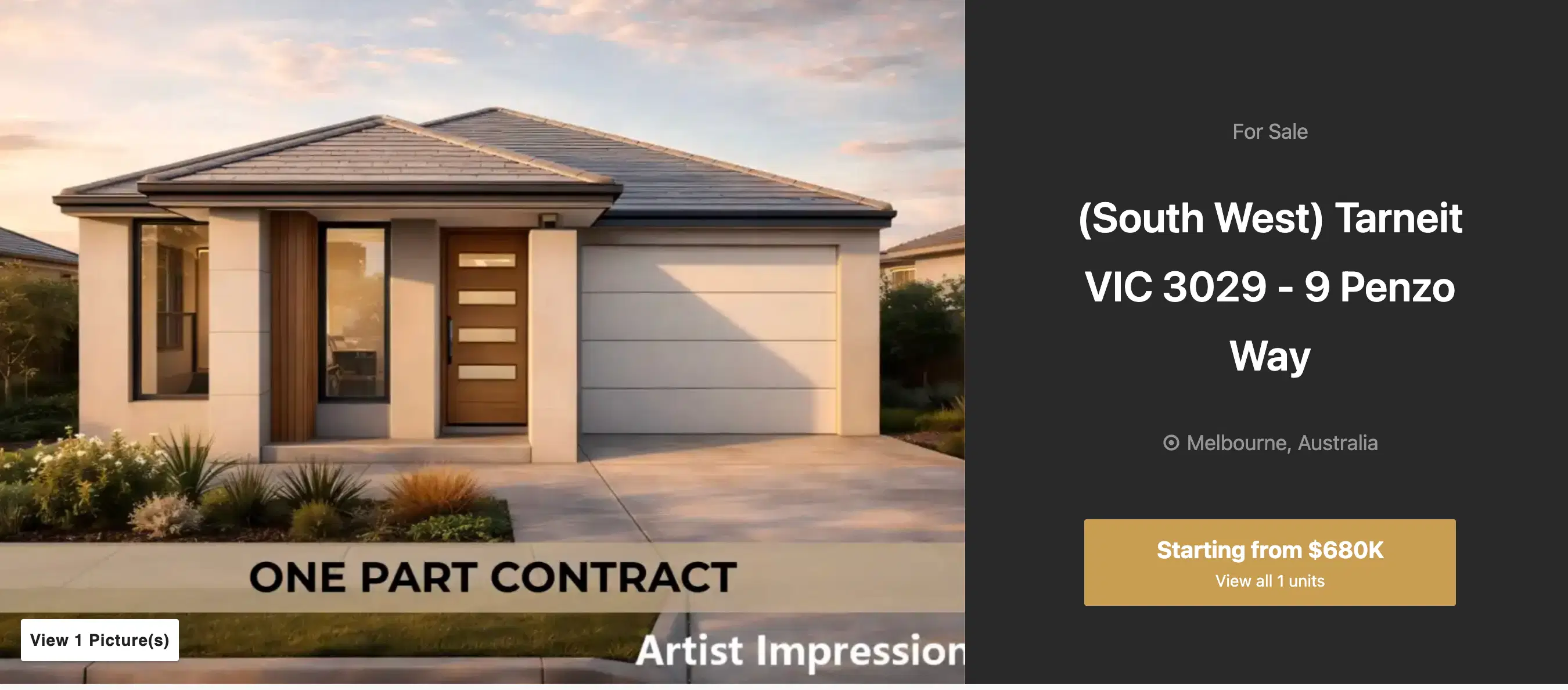
New builds in growth corridors like Tarneit or Geelong are now the primary vehicle for tax-efficient wealth.
3. The NDIS Goldmine: Government-Backed Tax Incentives
If you want the ultimate "Budget-Proof" investment, look at NDIS SDA (Specialist Disability Accommodation).
While the Budget cracked down on residential "land banking," it doubled down on NDIS funding.
The incentives for SDA housing are unique in the Australian tax landscape.
High Yield Meets High Deduction
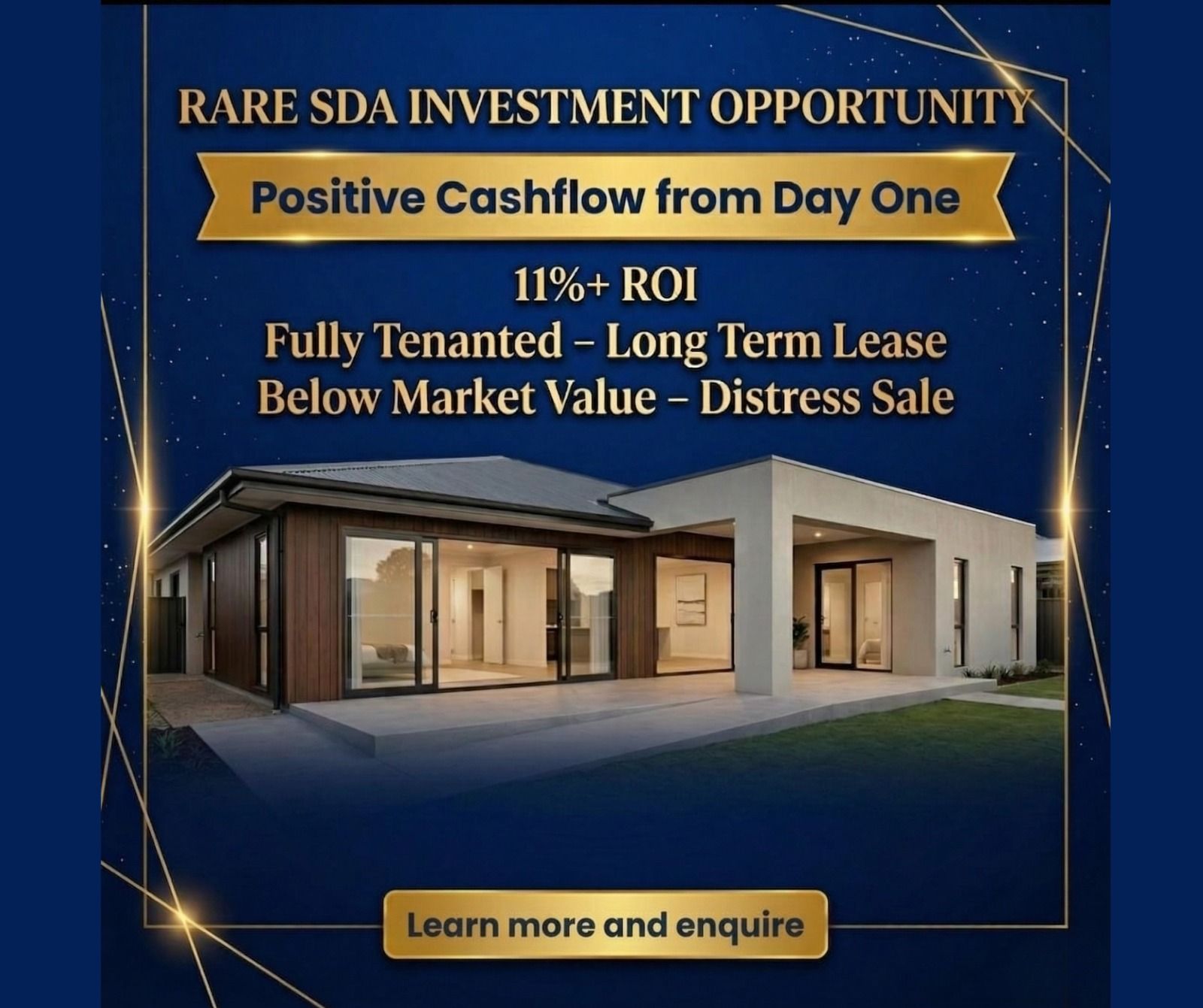
SDA properties often yield 10% to 15% gross.
In many cases, these properties are cashflow positive from Day 1, even after tax.
Because these are specialized builds, the depreciation schedules are significantly higher than a standard 4-bedroom home.
You get:
- Government-backed income streams.
- Massive Year 1 tax write-offs.
- Exemption from many of the "landlord taxes" being proposed for the private rental market.
The "Secure Income" Framework
At AZ Property Solutions, we see NDIS as the "Triple Threat" of investing.
- High yield.
- High tax deductions.
- Social impact.
Retirees, in particular, cannot depend on capital growth alone in this new tax environment.
You need secure income.
This is why we focus heavily on SMSF property investments that utilize SDA strategies.
The "Wait and See" Trap: Why Delaying is a Loss
The most dangerous phrase in property is "I’ll wait until the market settles."
The 2026 Budget has created a clear timeline.
Between now and July 2027, there will be a massive "flight to quality" as investors dump established stock and scramble for new build allotments.
If you wait until 2027 to pivot, you will be buying at the peak of the construction boom.
The Accidental Investor vs. The Strategic Investor
Accidental Investor:
- Buys an old 3-bedroom house in a "familiar" suburb.
- Faces rising land tax and capped rents.
- Loses negative gearing benefits in 2027.
- Pays high CGT on the way out.
Strategic Investor:
- Partners with AZ Property Solutions to identify high-yield new builds.
- Focuses on Co-living or NDIS SDA.
- Retains full negative gearing benefits.
- Enjoys government-indexed rental increases.
Which one do you want to be?

See what strategic investing looks like in practice.
Click the dashboard above to explore the kind of curated investment-grade properties we help investors access.
Expert Framework: How to Build Your "Post-Budget" Portfolio
We use a simple, 3-step framework to help our clients navigate these changes.
Step 1: Equity Assessment
Don't let your equity sit "lazy" in a property that the tax office is about to penalise.
We look at your current holdings and calculate the "Opportunity Cost" of staying in established stock.
Step 2: Yield Maximisation
In a high-interest-rate environment, 3% yield doesn't cut it.
We pivot your strategy toward high-yield assets like rooming houses or co-living spaces.
These assets are designed to "pay for themselves" while providing the tax benefits of a new build.
Step 3: Tax-Smart Structuring
Whether it's using an SMSF or a specialized trust, how you hold the property is just as important as what you buy.
We collaborate with tax professionals to ensure your structure maximizes the remaining Budget perks.

Frequently Asked Questions
Is negative gearing gone forever for established homes?
For properties purchased before the 2027 deadline, there are likely to be grandfathering clauses. However, any new "established" purchases after that date will not enjoy the same benefits. The message is clear: the government wants you to build.
Why is NDIS considered "Post-Budget Proof"?
The NDIS is a non-discretionary federal spend. The demand for Specialist Disability Accommodation is thousands of units short of what is needed. The government provides the incentive because they need private investors to solve the housing gap for Australians with disabilities.
Can I still invest in Melbourne?
Absolutely. But the "where" matters more than ever. Growth corridors in Melbourne’s West and South-East are prime for the "New Build" strategy. You want areas where infrastructure is catching up to the population.
Ready to Pivot Your Strategy?
The rules have changed, but the opportunity hasn't disappeared: it has just moved.
The investors who thrive in the next decade won't be the ones who complained about the Budget.
They will be the ones who read the fine print and moved their capital to where it is most protected.
At AZ Property Solutions, we specialize in high-yield, tax-efficient property strategies that the "big banks" and generic real estate agents don't talk about.
Let us help you navigate the 2026 Budget changes.
Contact us today for a strategy session.
Let's turn these policy shifts into your unfair advantage.
Disclaimer: This information is general in nature and does not constitute financial or tax advice. AZ Property Solutions recommends consulting with a qualified tax professional or financial advisor before making any investment decisions based on Budget changes.